


Forward to a friend Tweet this Share this on Facebook Share:

Home | Job Postings | Virtual jobs
Job Opportunity

Position: Marketing and Communications Coordinator
Organization: The Ontario Soil Network
Location: Fully remote within Ontario

37.5 hours/week · Permanent
$50,000 – $70,000 a year
Applications close September 4, 2026

About Ontario Soil Network
The Ontario Soil Network is a farmer-led peer-learning organization focused on soil health and regenerative agriculture in Ontario.

We convene farmers so they can learn from each other. We don't sell practices, and we don't position ourselves as the expert in the room. The farmers are the expertise; our job is to get them in the same field and then get out of the way.

About the role

This is OSN's only dedicated communications role. Everything the public sees or receives from us — emails, event promotion, the website, the podcast, social channels, press — passes through this position. It is remote, self-directed, and largely unsupervised. In season, it is also substantially field-based. You set your own hours and your own weekly priorities against a documented operating rhythm. There is no communications team to escalate to.

The person who does this job well can run a system on their own initiative from written procedure, and is equally comfortable at a keyboard and in a field with a camera.
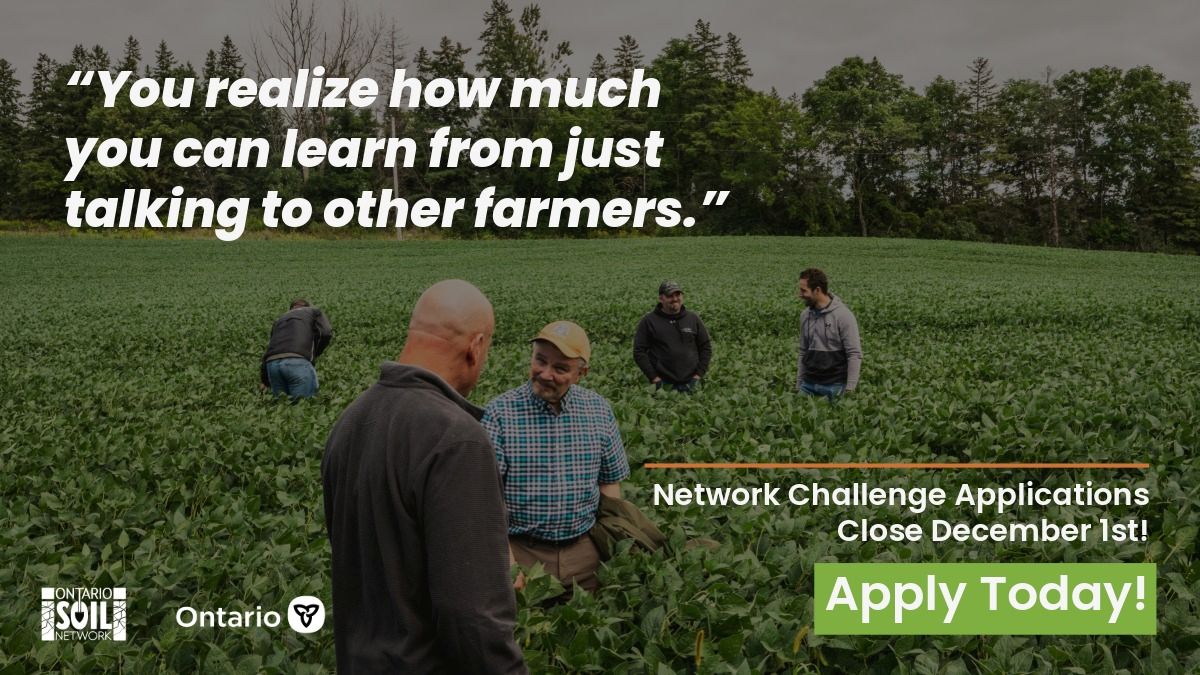
A substantial part of this job happens on farms, not at a desk. You photograph and film OSN events and farm visits, and interview farmers on camera to build the story material that everything else is made from. OSN's communications are only as good as the farmer voices behind them, and this position is how those voices get captured.

Roughly two-thirds of the work is hands-on production, including field capture. The other third is stewardship — keeping calendars, records, contact data, procedures and reporting current so the production work stays coherent over a season rather than becoming a series of one-offs.

You will be trusted with farmer relationships and with OSN's voice. Getting the voice wrong in public is the most consequential mistake available in this role.

What you'd do

Each area below is stated as an accountability. Step-by-step procedure for all of it already exists in our internal SOP library, which this role also keeps current.

Content and editorial
  • Write and produce OSN's newsletters across all four types — Content Drop, Event Announcement,
  • Monthly Digest, and Partner/Funder Impact.
  • Produce the launch package for each Crop Chats podcast episode: titles and descriptions, show notes, thumbnail direction, and the short-form content that follows from it.
  • Draft press releases, website copy, farmer stories, and partner-facing content.
  • Hold the editorial voice — everything published sounds farmer-first and peer-led: warm, grounded, never promotional or academic.
  • Gather and steward farmer quotes and stories so they can be reused across campaigns rather than collected fresh every time.

Field capture and farmer interviews

  • This is on-farm, in-season, hands-on work. It is the source of most of OSN's original content, and it can't be outsourced without losing the farmer relationship that makes it work.
  • Photograph OSN events, field days, farm tours, and farm visits. Maintain and organize the photo library so images are findable and reusable.
  • Film on-farm video for short-form and long-form content — farmer interviews, practice demonstrations, event coverage, and B-roll.
  • Interview farmers on camera and on the record: prepare questions, put people at ease, draw out a usable story, and capture clean audio in field conditions.
  • Edit and finish captured material to a publishable standard, or prepare it for the short-form workflow.
  • Plan capture ahead of the season, so events are covered deliberately rather than opportunistically and a single farm visit yields material for several purposes.
  • Obtain and record consent for the use of farmer images, footage, and quotes. Farmers must know how their material will be used before it is captured.
  • Build and maintain the story and quote material that newsletters, social, event promotion, and funder reporting all draw from.

Channels and distribution

  • Own the email programme end to end: list health, segmentation, build, scheduling, sending, and results.
  • Plan and run the content calendar so OSN keeps a visible, continuous presence between events rather than only around them.
  • Manage OSN's social channels and the publishing of video and podcast content.
  • Keep the website's communications-facing content current — event pages, news, farmer profiles, campaign landing pages.
  • Plan and run modest paid promotion where it supports event attendance.

Program communications

  • Run the full communications arc for every OSN event: save-the-date, promotion sequence, registration, reminders, on-the-day materials, and follow-up.
  • Coordinate with programme staff and host farmers to get event detail right — dates, locations, speakers, agenda, capacity.
  • Ensure accreditation and partnership acknowledgements are correct on every event asset. This is a compliance matter, not a formatting preference.
  • Support amplification of relevant partner-organization events.
  • Evaluation and reporting
  • Run OSN's six-domain communications evaluation framework on its documented cadence — weekly health check, monthly KPI review, quarterly synthesis, annual evaluation.
  • Track and report communications KPIs, and maintain the monthly tracking record.
  • Maintain the alumni engagement pipeline in the CRM and report on movement through it.
  • Produce communications reporting for funders, for government reporting obligations, and informally for the Board each quarter.
  • Run post-campaign retrospectives and feed what's learned into the next cycle.

Systems and stewardship

  • Own the annual communications budget: log spending, track burn against category, follow the expense and reimbursement procedure, and provide reconciled totals to the Executive Director.
  • Maintain the communications task board so work is visible to the rest of the team.
  • Keep contact data clean and correctly permissioned across the email platform and CRM.
  • Maintain the brand asset library and ensure brand consistency across everything OSN produces.
  • Keep written procedure current for everything this role owns.

What the year looks like
OSN communications runs on a documented cadence. This section is here because the role is remote and self-directed: no one will tell you what today's priority is.

Weekly: Comms health check — what's drafted, scheduled, sent, or stuck. Plan the week's content.
Monthly: Reconcile what shipped against what was planned. Lay out next month. KPI and budget review.
Quarterly: Evaluation review, learning synthesis, and a report to the Board.
Annually: Strategic evaluation, funder reporting, and next year's planning.
Triggered: A podcast episode drops, an event is confirmed, or a campaign starts — and its own arc begins.
Seasonality matters, and capture drives it. The work is not flat across the year. Summer, June through September, is the heaviest stretch — the on-farm event season, when event promotion, travel, and field capture stack up. Photography, filming, and farmer interviews can only happen when there's a crop in the ground and farmers are in the field, so the in-season months are front-loaded with shooting and the shoulder months with editing and publishing. Material captured in one summer feeds the following winter's communications. Winter is when strategy, evaluation, reporting, and system improvement get done.

What we're looking for
Qualifications

We care more about what you can do than where you learned it. As a guide:

  • Post-secondary education in communications, marketing, journalism, agriculture, or a related field, or equivalent practical experience.
  • Around three or more years in a communications, marketing, or content production role. Time spent in agriculture, in media, or in a small organization where you did a bit of everything counts for a lot.
  • A portfolio that shows both written and visual work.

Essential

  • Writing. You can write clearly for a farmer audience in a voice that is warm, plain, and credible — and hold that voice consistently across formats and over months.
  • Working independently from written procedure. You can pick up an SOP, follow it, and finish without supervision or reminders. This is remote, unsupervised work.
  • Self-managed cadence. You can hold a publishing rhythm over a full year without anyone chasing deadlines — including through the quiet months, when nothing external forces the issue.
  • Email marketing fluency. Comfortable building, segmenting, scheduling, testing, and reporting on email campaigns.
  • Judgment about attribution and permission. You check before using a partner's name, a logo, a farmer's photo, or a quote — and you treat getting it wrong as serious.
  • Photography and video. You can shoot usable stills and video in the field without a crew: competent with a camera in variable outdoor light, able to capture clean audio outdoors, and able to edit to a publishable standard. Formal training isn't required; a portfolio or body of work is.
  • Interviewing. You can put a farmer at ease on camera, ask questions that produce a real answer rather than a rehearsed one, and come away with material that's usable and true to what the person meant.
  • Comfort with farmers and in farm settings. You can hold a conversation at a field day, ask a farmer for their story, and be trusted with it. This is not a desk-only role.
  • Analytics literacy. You can read platform analytics, spot a trend, and say what it means in plain language — without being a data specialist.
  • Organization under load. Multiple events, campaigns, and deadlines overlap in season.

You can learn on the job

  • Editing website content in the site's page builder
  • Podcast production and publishing workflow
  • Advanced colour grading, motion graphics, and audio post
  • CRM administration and pipeline tracking
  • Paid social advertising
  • AI-assisted drafting, research, and workflow tools
  • Ontario agriculture sector knowledge, if you're coming from outside the sector

Nice to have
None of these are required, and their absence won't count against you:

  • A Transport Canada drone pilot certificate (RPAS). Aerial footage is genuinely useful for showing a field,
  • and we'd support you getting certified if you aren't already.
  • A project management certificate such as PMP or CAPM, or comparable experience running projects to a
  • schedule.
  • Experience in agriculture, food, or a rural community organization.

Explicitly not required
We'd rather say this plainly than have good candidates screen themselves out. The following are not expected of this role:

  • Web development beyond editing content in an existing template (HTML, CSS, and JavaScript experience is a plus)
  • Building or maintaining automation, scripts, or custom tooling
  • Graphic design to a professional standard — brand templates exist.
  • Broadcast- or agency-standard cinematography. The bar is "a farmer looks and sounds good and the story is clear," not a production house.
  • If you do have these skills, you're welcome — but the job is designed to be done without them.

Terms

This is a permanent, full-time position at 37.5 hours a week, employed by the Ontario Soil Network and reporting to the Executive Director.

The role is fully remote within Ontario, with regular travel during the June to September event season and occasional travel otherwise. That means driving to farms across Ontario, sometimes with early starts and long days, so a valid driver's licence and access to a vehicle are required. Mileage is reimbursed per funder policy, and longer trips use a rental vehicle. Field capture takes place outdoors on farms, in variable weather, carrying equipment.

Camera, audio, and editing software are provided by OSN.

The position comes with 14 vacation days, and 7 sick days a year, no questions asked, along with medical benefits and an annual professional development budget for continuing education and office supplies.

Salary is reviewed at the end of January.

Colleagues communicate during 9:00 am to 5:00 pm on working days. There is no expectation of being reachable outside those hours.

Compensation: $50,000 – $70,000 a year, depending on experience.

How to apply

Send a cover letter, a résumé, and a small portfolio by Friday, September 4, 2026 to: tori@ontariosoil.net
For the portfolio, we're looking for two or three writing samples and a handful of photos or a short video you shot yourself. It doesn't need to be polished or professionally produced. We want to see how you see. In your cover letter, tell us about a time you got a story out of someone who wasn't sure they had one.

Ontario Soil Network is committed to a fair and accessible hiring process. If you need an accommodation at any stage, let us know and we'll arrange it. We welcome applicants from all backgrounds, including those whose route into agriculture or communications wasn't a conventional one.

Please mention you saw this at GoodWork.ca.
 

Share this on Facebook   Tweet This!  Email this to a friend   Share this on LinkedIn   Add this to Google Bookmarks   Print this page

Note: The above is provided on an "As Is" basis and for general informational purposes only. People and Planet (also known as "GoodWork") is not responsible for the content, accuracy, timeliness, completeness, legality, reliability, quality or suitability of this posting. We do not screen or endorse the organizations or individuals involved. If you decide to accept an offer of employment, volunteering or any other arrangement, you do so at your own risk and it is your responsibility to take all protective measures to guard against injury, abuse, non-payment or any other loss. Please read our full Terms & Conditions.

Current status: Open/apply now.   Date posted: Aug 12 2026    ID: 76525   #LI-DNI