


 Share:
Home | Job Postings | Grow Food

Position: Horse Farming Apprentice
Farm: Seed and Stone Farmstead | inst | fb
Type: not a paid position
Housing: on-site accom. to be discussed with the selected applicants
Location: Rockingham, near Wilno & Killaloe, Ontario
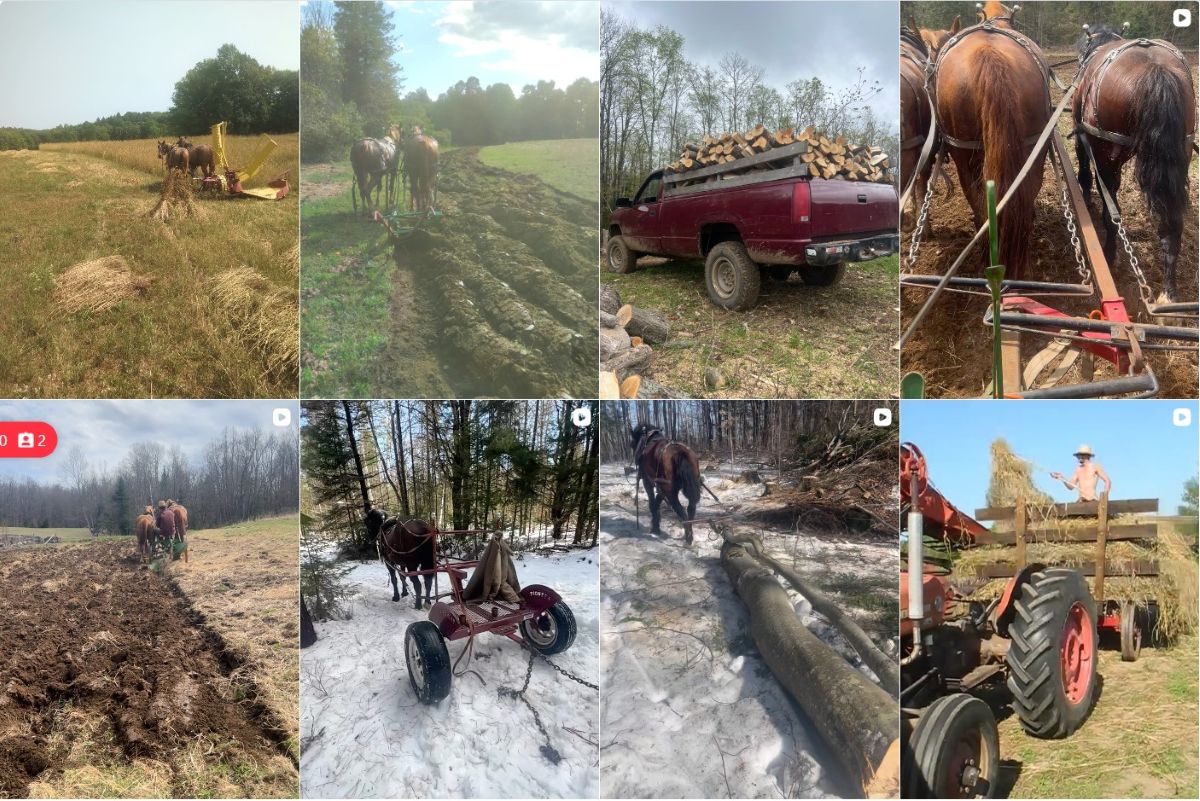
Seed and Stone is a 200-acre mule/horse powered farm, veggies, bush lot, syrup, hay, sheep, Dexters milking goats, Highland cows, Tamworth pigs.
Apprentice position:
Market Gardening and small scale horse farming apprenticeship position available for the 2026 season.
If interested, please e-mail your resume and a brief covering note to:
Franchetto.jackson @ gmail.com
subject: Farming Apprentice
Please mention you saw this at GoodWork.ca.
This question comes up a lot among regenerative, low-input and small-scale farmers. Draft horses aren’t “better” than tractors in every situation, but they do offer some real advantages, especially depending on scale, philosophy, and land type.
Less soil compaction: Horses exert pressure more gradually than heavy machinery, which helps preserve soil structure, drainage, and microbial life.
Renewable energy source: Horses run on grass and hay, not fossil fuels.
Lower emissions: No diesel exhaust, oil leaks, or fuel spills.
Manure = fertilizer: Built-in nutrient cycling for fields and gardens.
Lower fuel costs: No diesel or gasoline bills.
Dual-purpose animals: Horses can work and reproduce; tractors only depreciate.
Useful year-round: Logging, cultivating, mowing, hauling, sleigh work in winter.
Repair resilience: You don’t need specialized parts or electronics—skills and simple tools often suffice.
On small farms, a horse’s “maintenance cost” can be partially offset by pasture the land already produces.
Excellent for small or irregular fields: Tight turns, terraces, hillsides, orchards, vineyards.
Better crop awareness: The farmer is walking the field, noticing weeds, pests, soil moisture, and crop health.
Quiet operation: Less stress on livestock, wildlife, and humans.
Deeper connection to land: Many farmers say they’re more attentive and present working with horses.
Skill-based, not tech-dependent: Encourages craftsmanship, horsemanship, and observation.
Cultural continuity: Preserves traditional farming knowledge and rural heritage.
Not dependent on supply chains: Fuel shortages, price spikes, or tech failures matter less.
Work during power or fuel outages: Horses don’t care about grid failures.
Long lifespan: A well-kept draft horse can work productively for 15–20 years.
Lower peak power than modern tractors.
Daily care required, whether or not they’re working.
Skill and time investment: Training and handling horses takes patience.
Not ideal for large-scale monoculture or tight planting/harvest windows.
Draft horses shine in:
Draft horses trade speed and raw power for soil health, sustainability, resilience, and relationship with the land. For some farmers, that’s not a compromise — it’s the whole point.


Note: The above is provided on an "As Is" basis and for general informational purposes only. People and Planet (also known as "GoodWork") is not responsible for the content, accuracy, timeliness, completeness, legality, reliability, quality or suitability of this posting. We do not screen or endorse the organizations or individuals involved. If you decide to accept an offer of employment, volunteering or any other arrangement, you do so at your own risk and it is your responsibility to take all protective measures to guard against injury, abuse, non-payment or any other loss. Please read our full Terms & Conditions.
Current status: Open/apply now. Date posted: Jan 25 2026 ID: 75055 #LI-DNI